
Most LinkedIn Marketing Agency for SaaS don’t fail on LinkedIn because of bad products or weak offers.
They fail because they approach LinkedIn the same way they approach every other advertising platform.
The campaign launches. Early results look promising. Click-through rates are healthy, leads start coming in, and the team becomes optimistic about scaling. A few weeks later, performance starts slipping. Cost per click rises, engagement drops, and suddenly the conversation shifts to finding new creatives or rewriting ad copy.
While creative quality matters, it’s rarely the root cause.
The real issue is usually much deeper.
It’s the way SaaS companies approach audience size, buying committees, funnel structure, and demand generation on LinkedIn.
Understanding these factors can dramatically improve the performance of your LinkedIn marketing efforts and help you generate pipeline without constantly increasing your budget.
Why LinkedIn Marketing for SaaS Is Different From Traditional B2B Marketing
Many businesses treat LinkedIn as just another advertising platform.
That’s a mistake.
Unlike Facebook, Instagram, or Google Display campaigns, LinkedIn operates within a highly specialized professional environment. SaaS companies often target a very specific group of people:
- Revenue leaders
- Operations professionals
- IT decision-makers
- Marketing executives
- Product teams
- C-level executives
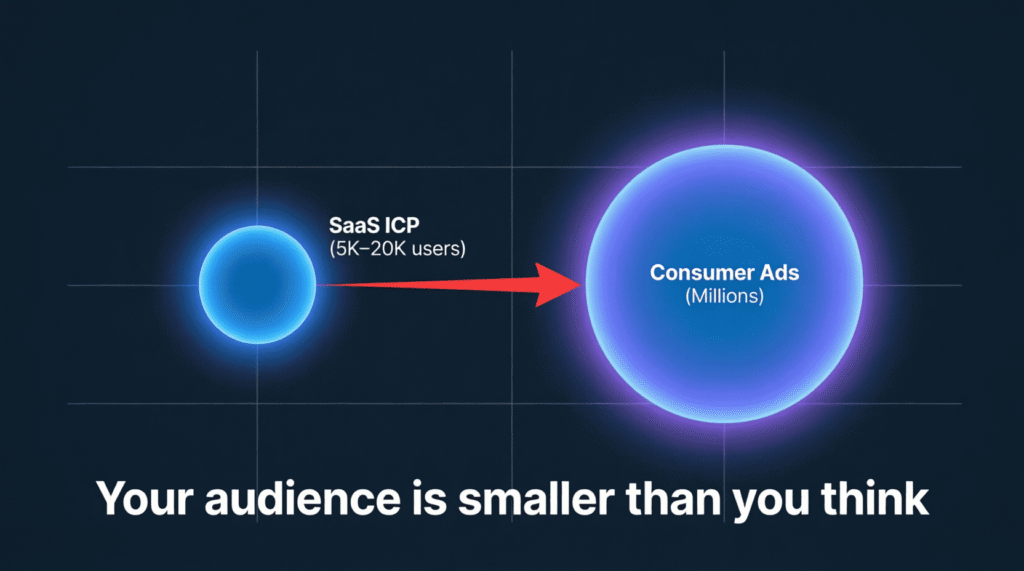
The challenge is that these audiences are usually much smaller than companies realize.
A SaaS platform serving RevOps leaders at mid-market companies may only have a few thousand highly qualified prospects available on LinkedIn.
That changes everything.
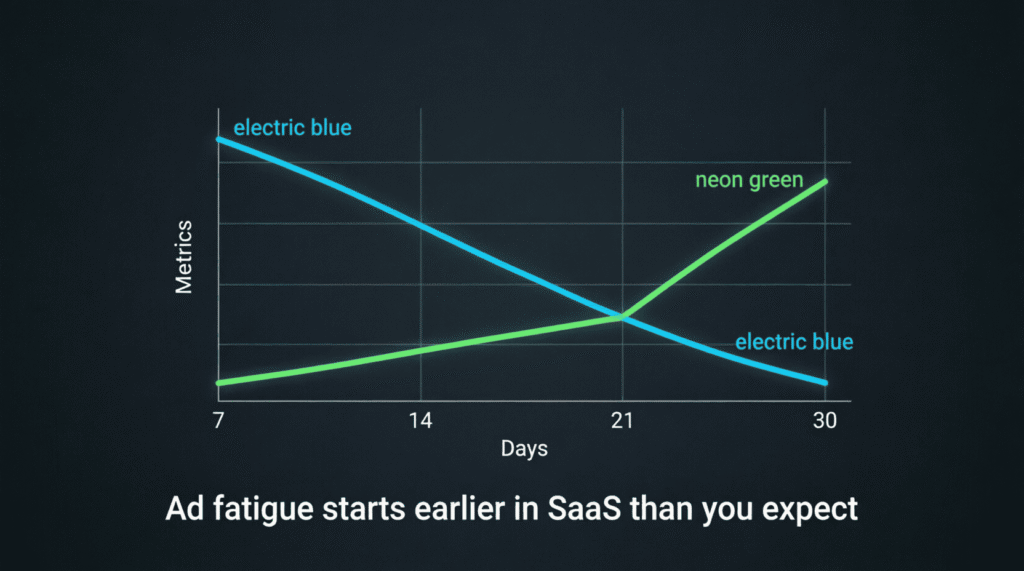
The same campaign tactics that work for broader audiences often fail because LinkedIn audiences experience ad fatigue much faster.
This is why effective LinkedIn Marketing for SaaS requires a completely different strategy from general B2B advertising.
The Audience-Size Problem Most LinkedIn Marketing Agencies Miss
One of the biggest mistakes in LinkedIn Ads for SaaS is ignoring audience limitations.
Most SaaS companies have an addressable audience somewhere between 5,000 and 50,000 people.
Sometimes it’s even smaller.
Imagine targeting:
- VPs of Revenue Operations
- SaaS companies
- North America
- 200-1000 employees
The resulting audience may only contain a few thousand people.
Now consider what happens when those same individuals see the same ad repeatedly over several weeks.
Frequency rises.
Engagement falls.
People stop noticing the ad.
LinkedIn’s algorithm responds by increasing costs to maintain delivery.
From the outside, it appears that the creative stopped working.
In reality, the audience became saturated.
This is why a successful LinkedIn marketing agency for SaaS starts with audience math before discussing creative concepts.
Questions that should be answered early include:
- How large is the ICP?
- How quickly can the audience become exhausted?
- What budget can this audience realistically support?
- How frequently should messaging be refreshed?
Without these answers, scaling becomes guesswork.
Why Buying Committees Matter More Than Individual Decision-Makers
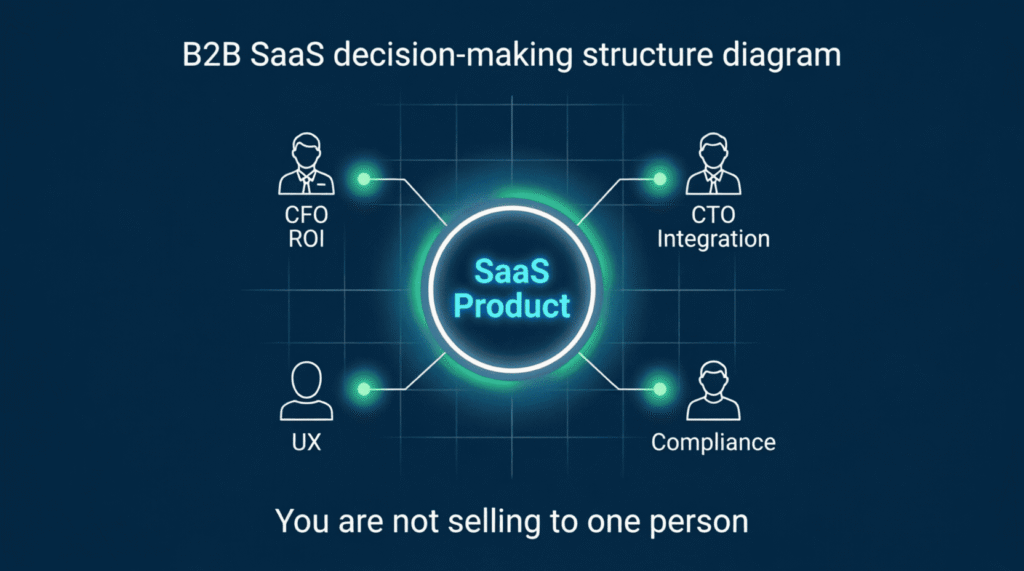
Most SaaS purchases involve multiple stakeholders.
Yet many LinkedIn campaigns target only one person.
This creates two major problems.
First, you miss key influencers involved in the purchase process.
Second, you unnecessarily shrink an already limited audience.
In most SaaS buying journeys, you’ll encounter several stakeholders:
Economic Buyers
These individuals control budget approvals and care about:
- ROI
- Revenue impact
- Cost reduction
- Efficiency gains
Technical Buyers
These stakeholders evaluate:
- Integrations
- Security
- Infrastructure requirements
- Implementation complexity
Champions and End Users
These people care about:
- Ease of use
- Workflow improvements
- Daily productivity
- Adoption across teams
Compliance, IT, or Procurement Teams
Depending on the product, these groups may influence final approval.
A sophisticated B2B LinkedIn marketing agency develops different messaging for each audience segment.
Instead of showing everyone the same advertisement, campaigns should align messaging with the priorities of each stakeholder group.
This approach increases relevance while simultaneously expanding your usable audience size.
The Problem With Generic Decision-Maker Targeting
Many agencies rely heavily on broad “decision-maker” targeting.
It sounds attractive because it simplifies campaign setup.
Unfortunately, it usually reduces performance.
When one message tries to speak to executives, technical evaluators, and end users simultaneously, it often resonates with nobody.
A CFO wants different information than a Product Manager.
A CTO evaluates software differently than a Sales Director.
Effective SaaS campaigns recognize these differences and build messaging accordingly.
The result is stronger engagement, higher conversion rates, and more qualified pipeline.
PLG vs Sales-Led SaaS: Your Funnel Must Match Your Business Model
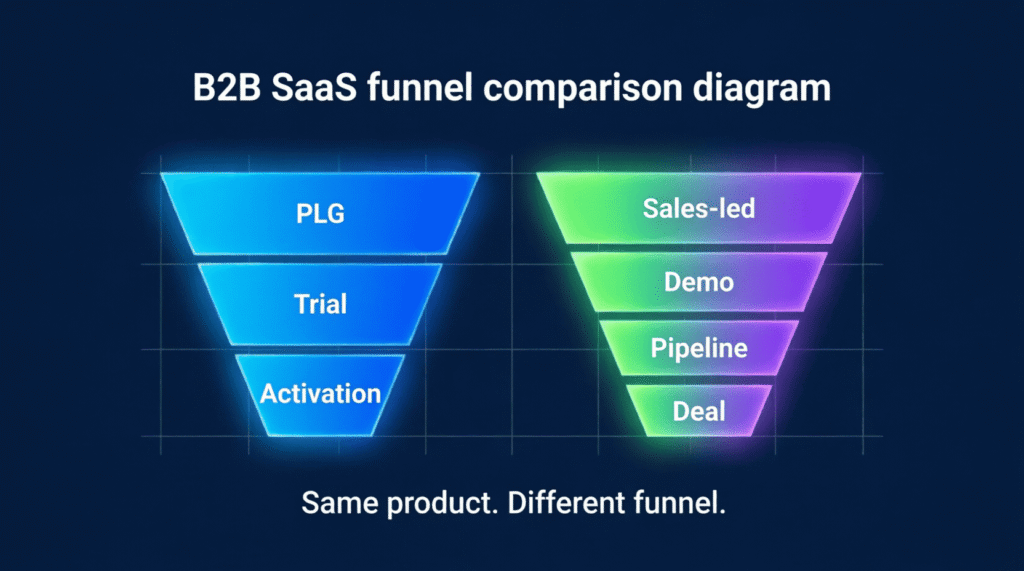
Another common LinkedIn mistake involves funnel misalignment.
Not every SaaS company sells the same way.
Your LinkedIn strategy should reflect how customers actually buy your product.
Product-Led Growth (PLG) Companies
PLG businesses rely on product experience to drive adoption.
Their primary goals include:
- Trial signups
- Product activation
- User engagement
- Self-serve conversions
For these businesses, forcing users into demo requests often creates unnecessary friction.
The product should do the selling.
Sales-Led SaaS Companies
Sales-led organizations typically sell:
- Enterprise software
- Complex solutions
- High-ticket contracts
- Multi-stakeholder deals
These buyers often require conversations before making decisions.
Driving enterprise prospects into free trials may generate activity, but it rarely creates qualified opportunities.
Hybrid SaaS Companies
Many modern SaaS businesses operate somewhere in the middle.
They combine self-service acquisition with sales-assisted growth.
For these companies, segmentation becomes critical.
Smaller companies may enter through free trials.
Enterprise accounts may require demos.
Senior executives may need strategic conversations.
Practitioners may benefit from educational resources first.
The best SaaS demand generation agency understands how to build separate conversion paths for different audiences rather than forcing every visitor through the same funnel.
Why Organic Content and Paid Advertising Should Work Together
One of the most overlooked growth opportunities on LinkedIn is the relationship between organic content and paid advertising.
Many organizations treat them as separate channels.
That’s a costly mistake.
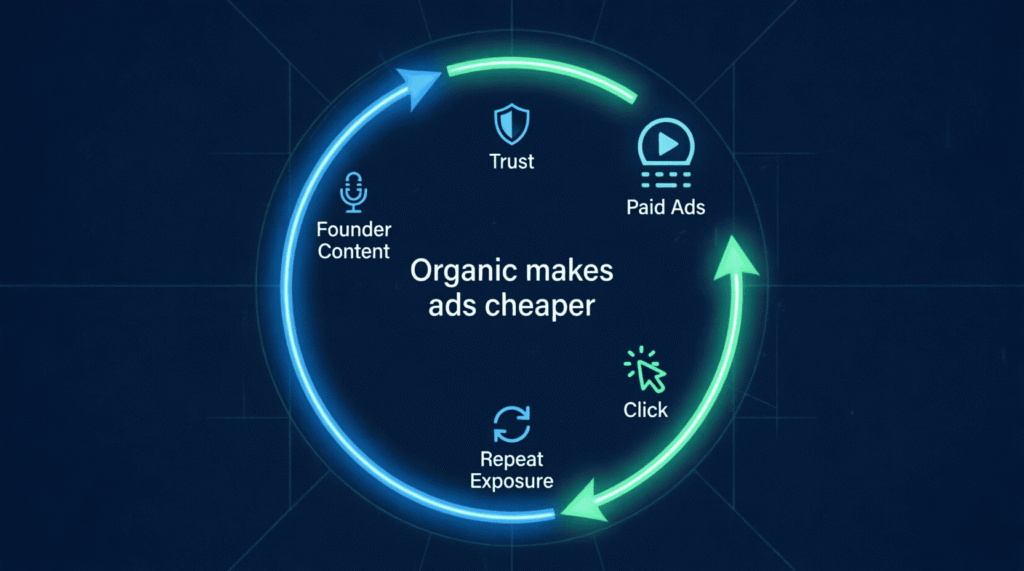
When founders, executives, or subject-matter experts consistently publish valuable content, something important happens.
The audience becomes familiar with the brand.
Trust begins forming before prospects ever click an ad.
When those same people later encounter paid campaigns, engagement tends to increase.
This familiarity often leads to:
- Higher click-through rates
- Lower acquisition costs
- Better conversion rates
- Improved brand recall
This is one reason founder-led content has become so effective in SaaS.
Not because personal branding is trendy.
Because it improves demand generation performance.
LinkedIn recognized this behavior and introduced Thought Leader Ads, allowing companies to promote content from individuals instead of relying solely on traditional brand advertisements.
The most successful SaaS companies use organic and paid efforts as parts of the same growth system.
How Often Should SaaS Creative Be Refreshed
Creative fatigue happens faster on LinkedIn than many marketers expect.
Especially when audiences are small.
A useful guideline looks like this:
| Audience Size | Suggested Refresh Cycle |
| Under 20,000 | Every 2-3 weeks |
| 20,000-50,000 | Every 3-4 weeks |
| Over 50,000 | Every 4-6 weeks |
However, refreshing creative doesn’t always require rebuilding campaigns from scratch.
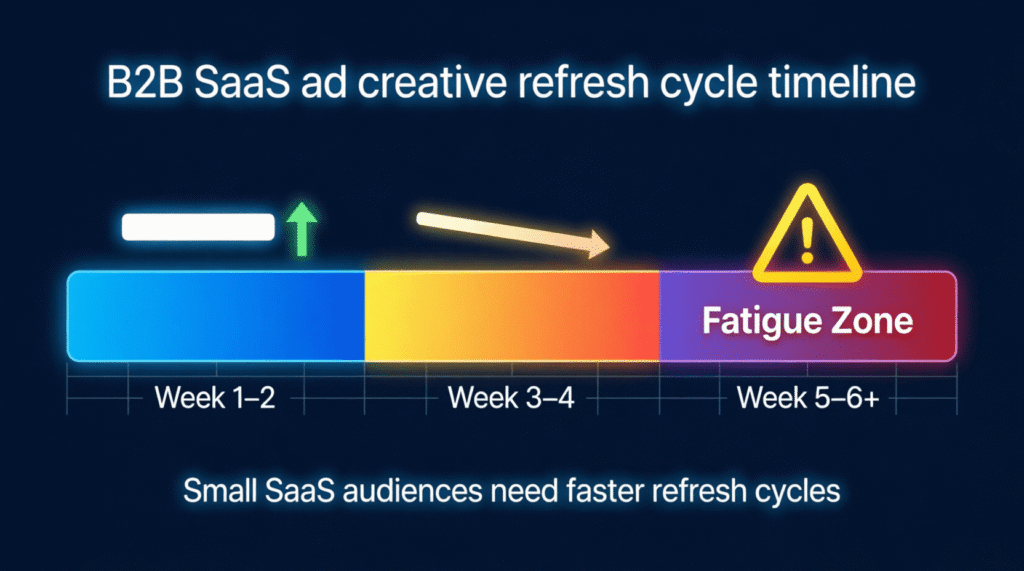
Small changes often create meaningful improvements:
- New headlines
- Different opening hooks
- Updated customer stories
- Fresh visuals
- Revised calls-to-action
The core offer can remain unchanged.
The objective is maintaining attention and relevance.
One metric deserves special attention: frequency.
Once audiences begin seeing the same advertisement six to eight times, performance often starts declining.
Monitoring frequency can help identify fatigue before campaign results suffer significantly.
How to Choose the Right LinkedIn Marketing Agency for SaaS
Hiring an agency should solve problems, not create new ones.
Unfortunately, many agencies apply generic B2B playbooks to SaaS businesses without considering audience limitations, buying committees, or funnel structure.
Before signing a contract, ask direct questions.
How Do You Handle Small ICP Audiences
A strong answer should include:
- Audience segmentation
- Creative rotation planning
- Frequency monitoring
- Budget pacing strategies
How Do You Build Messaging for Different Stakeholders
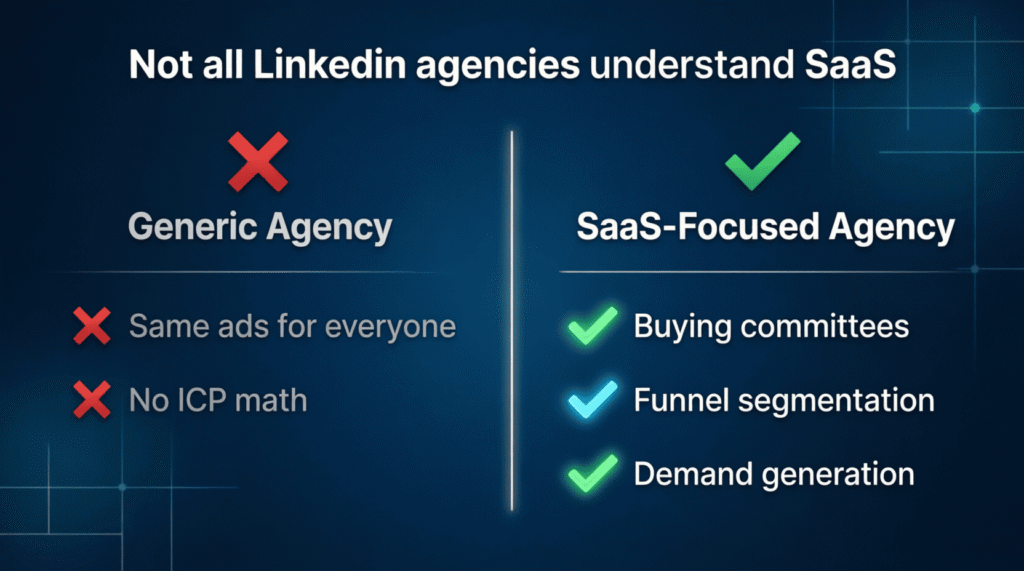
The agency should explain how it addresses:
- Economic buyers
- Technical evaluators
- End users
- Executive stakeholders
How Do You Approach PLG, Sales-Led, and Hybrid Funnels
Campaign structure should adapt based on your sales model.
One-size-fits-all answers are usually warning signs.
How Does Organic Content Support Paid Campaigns
A modern SaaS growth strategy should connect:
- Founder content
- Executive thought leadership
- Organic engagement
- Paid promotion
These elements should reinforce one another.
Signs You’re Working With the Wrong Agency
Watch for these red flags:
- Generic campaign templates
- No discussion about audience size
- Identical messaging for all personas
- Little understanding of SaaS buying committees
- No organic content strategy
- Heavy focus on leads instead of pipeline
Great agencies talk about revenue, pipeline quality, and long-term demand generation not just clicks and impressions.
How SaaS Companies Can Win on LinkedIn
Most SaaS companies don’t need bigger budgets to improve LinkedIn performance.
They need a strategy built around how SaaS buyers actually behave.
Audience size, buying committees, funnel structure, creative fatigue, and the relationship between organic and paid marketing all influence results.
The companies generating a consistent pipeline from LinkedIn understand this.
They stop treating LinkedIn like a broad consumer advertising platform and start treating it as what it really is: a highly targeted environment where a small number of decision-makers make big purchasing decisions.
Whether you manage campaigns internally or work with a LinkedIn marketing agency for SaaS, long-term success comes from designing your strategy around those realities rather than fighting against them.
Book a free consultation call with our expert today and get what your business deserved most.
SaaS LinkedIn Marketing Agency related FAQs
Q1. What makes a LinkedIn marketing agency for SaaS different from a general agency?
A SaaS-focused agency understands small audiences, complex buying committees, longer sales cycles, and the differences between PLG and sales-led growth models.
Q2. Is LinkedIn advertising worth it for SaaS companies?
Yes. LinkedIn remains one of the most effective platforms for reaching decision-makers, provided campaigns are built around audience limitations and buyer intent.
Q3. How much should a SaaS company spend on LinkedIn Ads?
Many SaaS businesses start between $5,000 and $15,000 per month. The ideal budget depends on audience size, deal value, and sales cycle length.
Q4. How long does it take LinkedIn Ads to generate a pipeline?
Initial performance indicators often appear within four to six weeks. Qualified pipeline typically develops over eight to twelve weeks.
Q5. What’s the difference between a SaaS demand generation agency and a LinkedIn ads agency?
A SaaS demand generation agency focuses on the entire buyer journey, including organic content, paid acquisition, nurturing, and pipeline generation. A LinkedIn ads agency typically focuses only on campaign execution.
Q6. Can LinkedIn Marketing for SaaS work for PLG businesses?
Absolutely. The key is aligning campaigns with product-led objectives such as free trials, product activation, and self-serve adoption rather than forcing prospects into sales conversations too early.
