
 How to get clients from LinkedIn is a question every freelancer, agency owner, and B2B service provider is asking right now. LinkedIn is a very different platform than other platforms because people don’t come here for just scrolling or entertainment. They come here to grow, get solutions of their problems, guide people and share knowledge. That’s exactly why it has become one of the best places to get leads on LinkedIn and how to find clients on LinkedIn without investment.
But, most people fail on LinkedIn because they treat it like a cold DM machine. They send random pitches without clear strategy and ICP. In results they get ignored, and assume that the platform is not working.
The fact is that LinkedIn works extremely well when you focus on building real conversations instead of chasing quick sales. In this guide, I’ll show you the exact approach which I use to get clients from LinkedIn, how I connect with decision-makers, and how I turn LinkedIn into a consistent B2B lead generation channel without investing.
Why LinkedIn Is the Best Platform to Get Clients from LinkedIn in 2026
Before jumping into strategies, it’s important to understand why LinkedIn works so differently as compared to other platforms.
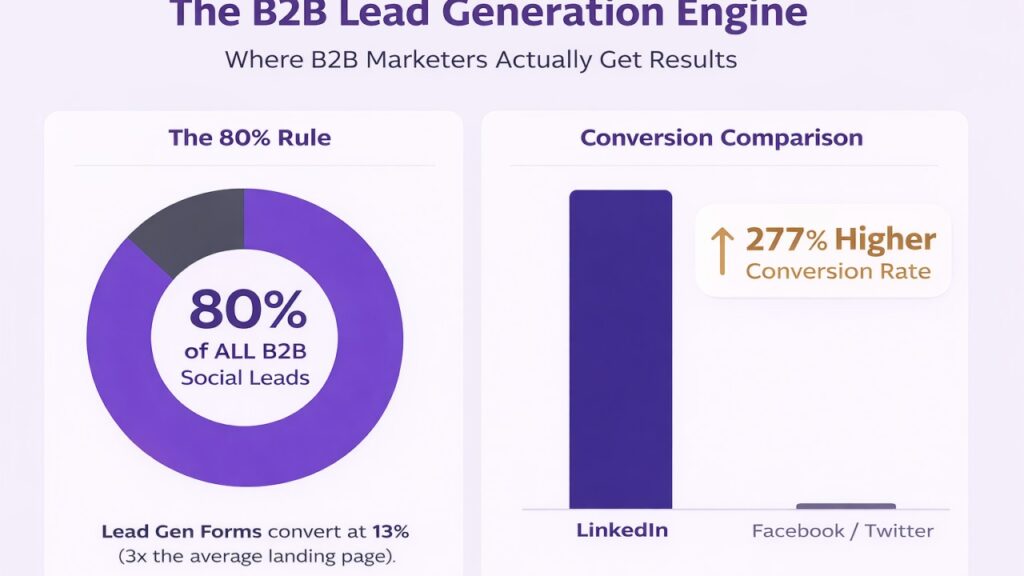
When people open LinkedIn, they’re already thinking in a professional mindset. They’re not just there to watch random videos or scroll for fun. They are focused on business growth, career opportunities, networking, or solving problems inside their company.
That changes everything.
Your potential clients are naturally more open to conversations about services, partnerships, and solutions that can help them to improve results.
Another huge advantage is instant access to decision-makers. On LinkedIn, you can connect with founders, CEOs, marketing heads, or operations managers without dealing with receptionists or hoping your email lands in the right inbox.
Following combination makes LinkedIn more powerful:
- Advanced targeting by industry, role, and company size
- Built-in trust through recommendations, experience, and profile credibility
- Organic reach through consistent content and engagement
- Natural networking through comments, groups, and direct conversations
Very few platforms bring all of these together in one place. That’s why LinkedIn has become one of the strongest platforms for building genuine/real business relationships and finding high-quality leads. These are the most effective ways to get clients from LinkedIn that actually work long term.
Step 1: Turn Your LinkedIn Profile into a Lead Generation Machine
Most people treat their LinkedIn profile like a digital resume. They list their job titles, add something about past roles, what they do, no professional profile picture, and think it is done.
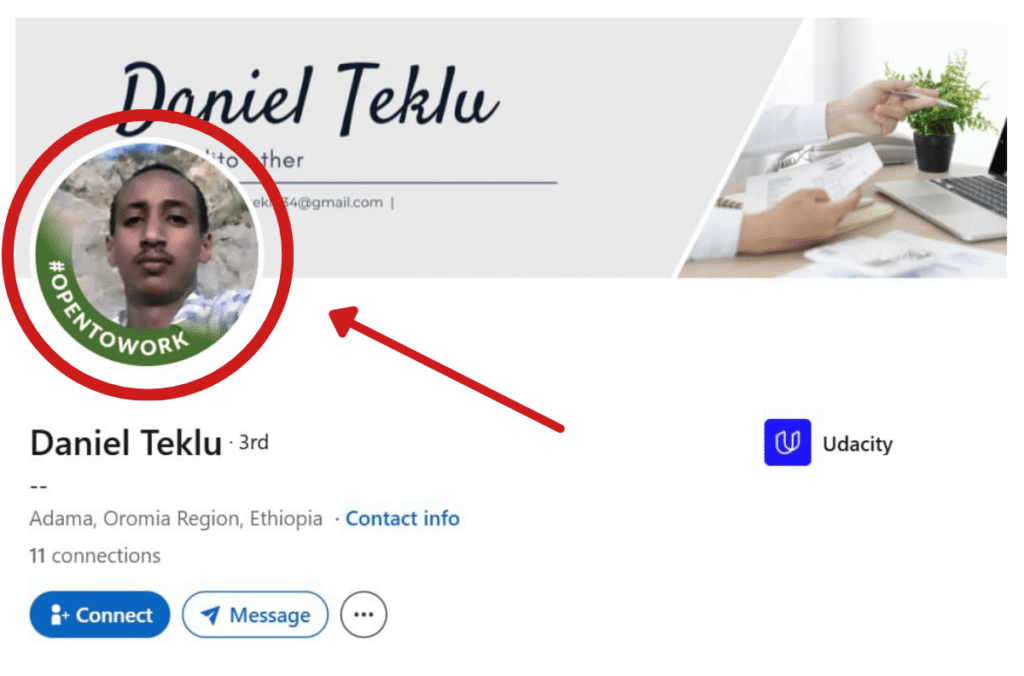
This approach of treating LinkedIn becomes a cause of leaving opportunity. These types of people remain behind and don’t take advantage of LinkedIn profile optimization and LinkedIn real power in the right way to get clients from LinkedIn in LinkedIn lead generation.
Your profile isn’t a resume, it’s a landing page. It should speak directly to your target audience what you do and how much value you will generate for them, communicate your value proposition which helps them to move with you in next steps like booking a call, sending you a message, and visiting your website.
Here are some following steps to rebuild your LinkedIn profile with keeping above goals in mind:
Optimize Your LinkedIn Headline to Attract the Right ICP
Your headline is the first thing which is seen by anyone in search results, in connection requests, in comments on any post. Most people write their job title there and some people leave it blank.
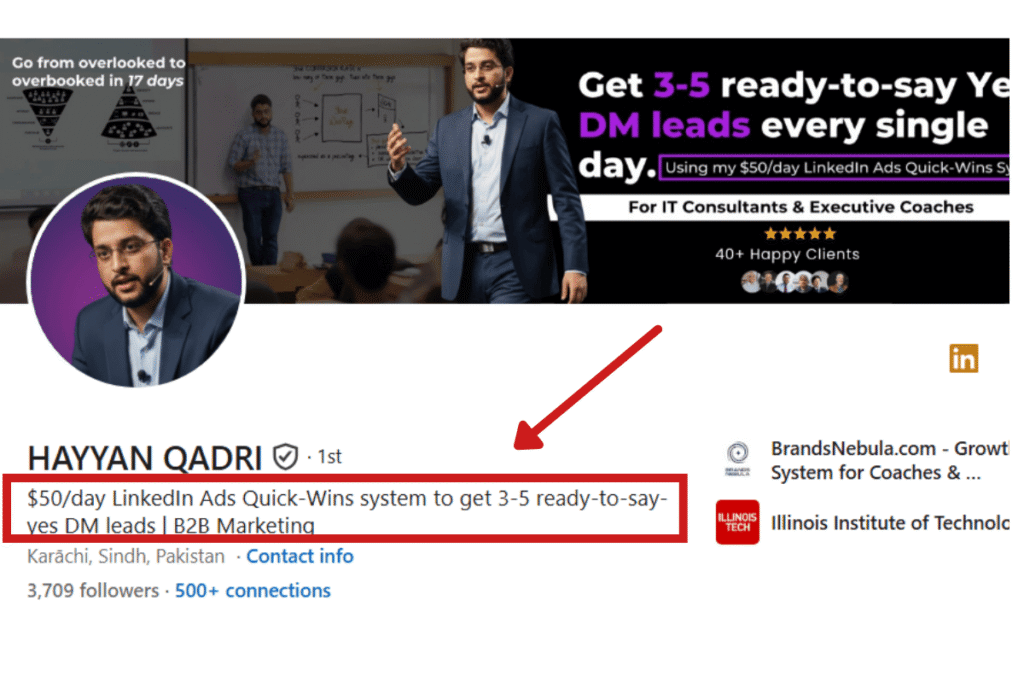
Instead of this, write headlines like this: “What do you do, and who do you help?”
A weak headline example is “Founder at XYZ Agency”
A strong headline example “I help e-commerce founders reduce customer support costs by 40% using AI | B2B SaaS | Booked 200+ demos for clients”
Headlines are the 1st step to communicate with your audience. The headlines have a clear message to communicate your relevance to buyers.
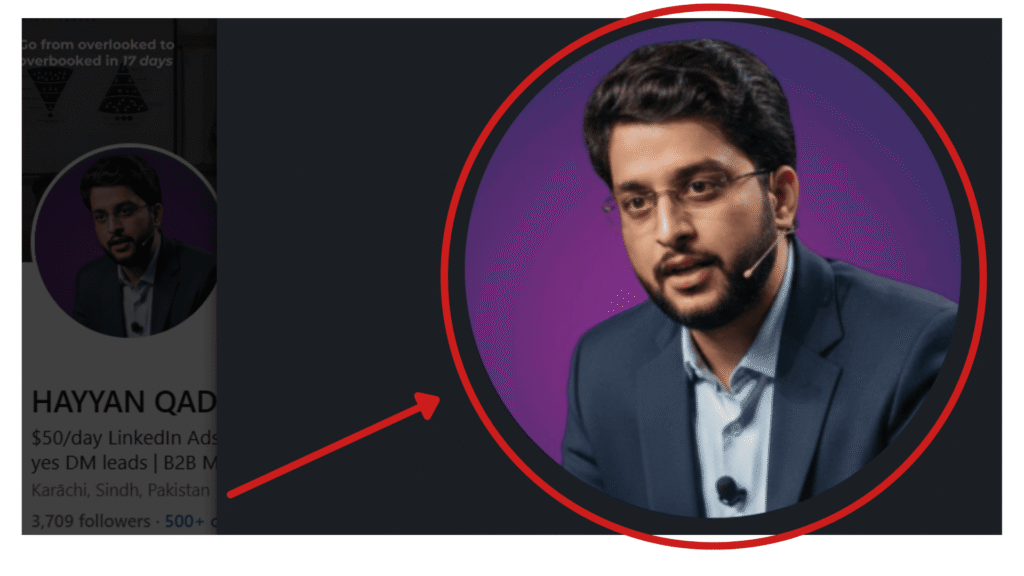
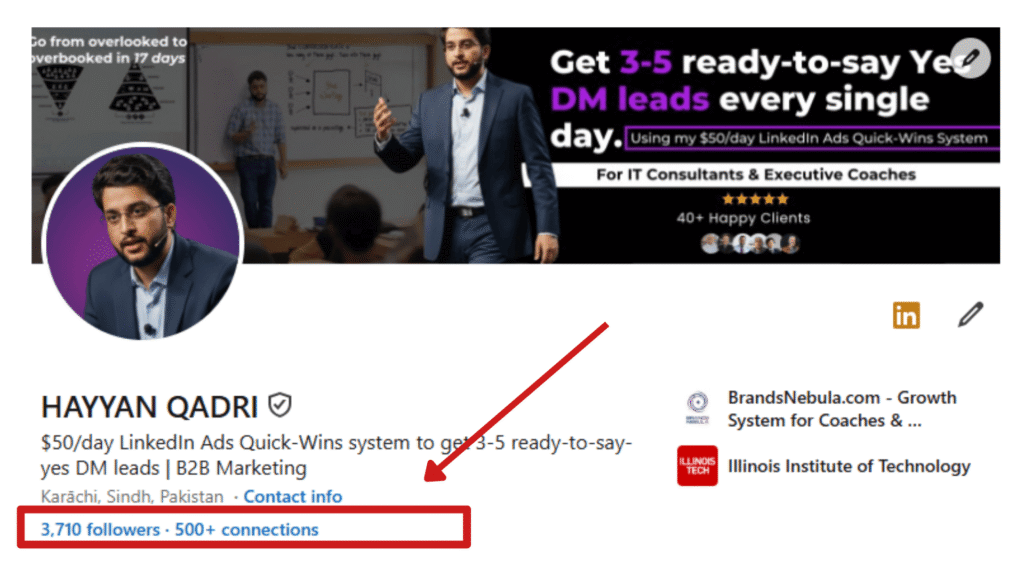
Use a Professional Picture and Custom Banner
Your profile picture matters the most because it creates the first impression on the people you want to connect with. A clear, well-lit headshot profile picture gives credibility signals. A blurry selfie, a vacation photo, or no profile picture at all makes people neglect your profile and it also gives a bad impression.
Your banner is one of the first things which people see on your profile. Some leave it empty all or do not modify it properly.
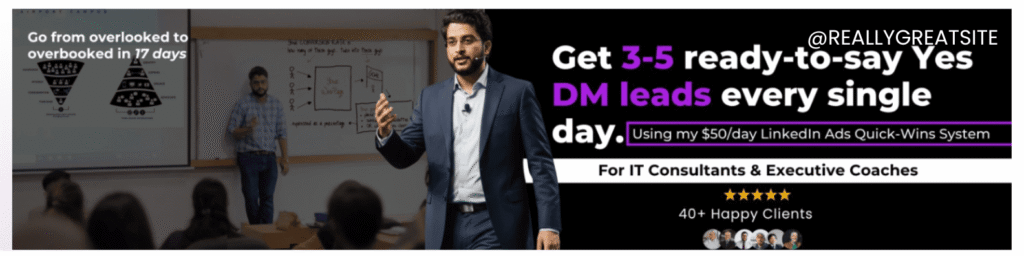
Use Canva to create a custom banner that has a clear call-to-action, proof of your work, or a simple message that feels easy to understand for profile visitors during LinkedIn lead generation.
Write an About Section That Converts
The About section is one of the most compound of your profile that has a summary of what you do really. Many profiles go completely flat on this. People either leave it empty or write a wall of content or use third-person about text that nobody reads.
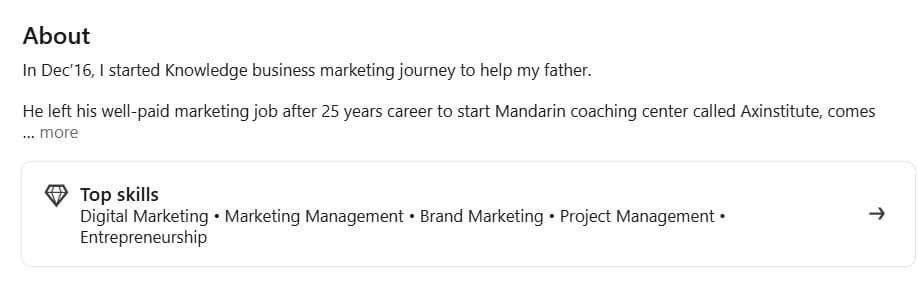
Write it like you’re talking to your ideal client. Open with the problem which they’re experiencing, explain how you solve it, add social proof through case studies or client results, and close with a clear CTA.
If you have helped SaaS companies to get more qualified demo calls, clearly mention it. If you have helped wellness brands to reduce support costs, say that too. Being specific helps people to trust on you faster than using general lines like “I deliver value.”
Use the Featured Section Strategically
The Featured section lets you pin content to the top of your profile and it’s one of the highest-converting areas for LinkedIn lead generation.
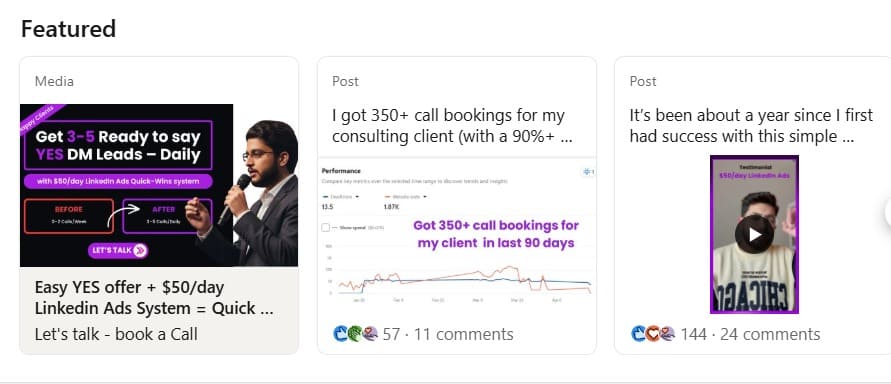
Add lead magnets, landing pages, Calendly links, or case study posts here. Think of it as your mini-landing page within LinkedIn. If someone visits your profile and is even slightly interested, the Featured section should give them an obvious next step.
Step 2: Build an Ultra-Refined Lead List
In my experience one of the biggest mistakes in LinkedIn outreach strategy is trying to connect with everyone. Sending hundreds of connection requests to random people with “marketing” in their job title usually wastes time, gets ignored, and can cause your LinkedIn account restriction.
The better approach: build a clear list. A small, high-quality group of prospects who closely match your ideal customer profile (ICP).
Define Your Ideal Client Profile
Before you search for anyone, get precise about who you’re actually targeting. Don’t just say “SaaS companies.”
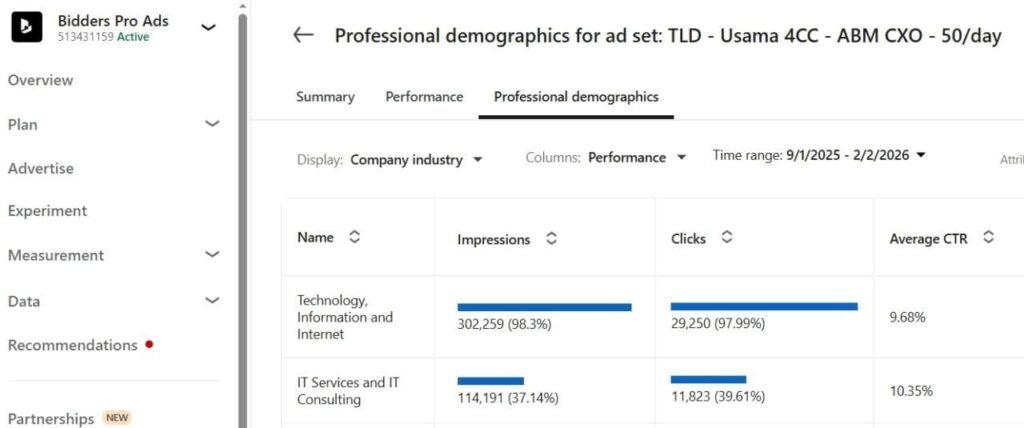
Be specific like:
What industry are they in? (e-commerce, fintech, healthtech)
What size is the company? (10-50 employees, 50-200, enterprise)
What revenue range signals they can afford your service?
What tech stack do they use? (Shopify, BigCommerce, Magento)
What geography are they in? (North America, Europe, Asia)
Who is decision maker? (Head of Customer Experience, COO, technical founder)
What does a high-fit company look like and what does a bad fit look like?
Write this out explicitly. The more defined your ICP, the more precise your outreach, and the higher your reply rate.
Use LinkedIn Sales Navigator and Advanced Search
LinkedIn’s Advanced Search is powerful on its own. Sales Navigator is the next level which takes it further, it gives permission at account-level filters, on Boolean filters, and buying signals like funding status and hiring growth. This is one of the most effective LinkedIn Sales Navigator tips for finding the right prospects faster.
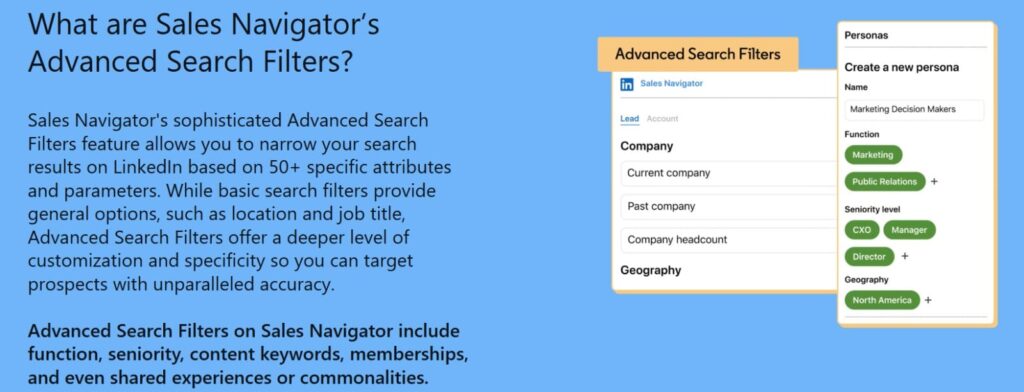
Boolean strings help you get creative with targeting. For example, if you want to reach VP-level and C-level contacts at mid-market SaaS companies while excluding certain roles, you can build a Boolean string like:
(VP OR “Vice President” OR COO OR CEO) AND (“customer experience” OR “customer success”) NOT “looking for opportunities”
Run this search, filter by company size and geography, and you’ll get a better list than a basic keyword search would produce.
You can also use the school filter to find alumni of specific universities a surprisingly effective way to build instant rapport in your outreach messages.
You can learn more about its full features on the LinkedIn Sales Navigator official page.
Build Lookalike Lists from Your Best Clients
Once you have a list of your current clients, look at what makes them good clients and why they are valuable to your business.
What do they have in common? Check Industry, company size, tech stack, support volume, team structure also?
Use those attributes to find lookalike companies. These prospects share the characteristics of people who’ve already bought from you which means they’re statistically more likely to convert.
Third-party data providers can supplement your LinkedIn research, particularly for finding companies that match specific tech stack or revenue range criteria.
Step 3: The Real Way to Get Clients from LinkedIn Using Outreach
Low reply rates on LinkedIn cold outreach usually come down to one core issue: the messages feel automated and robotic.
People can instantly feel when a message is copied, scripted, or sent in bulk which is completely ignored.
You know the ones. “Hi [Name], I came across your profile and was really impressed. I’d love to connect and explore potential synergies…”
Nobody will respond to this message. It immediately trips the spam filter in people’s minds. Most users ignore generic marketing messages, so the moment something feels copy-pasted or impersonal, they shut it down without thinking.
The CCQ Method: Compliment, Commonality, Question
The most effective LinkedIn cold outreach messages follow a simple structure:
- Compliment: Start your message with something specific and real about their work. Not a generic compliment like “great profile,” but an actual observation which you have. It may be a post they shared, a campaign they worked on, or a result they mentioned publicly. That kind of detail shows you’ve actually paid attention, and it instantly makes the message feel human instead of automated.
- Commonality: Look for a shared point of connection before you pitch anything. It could be a mutual group, the same university, a similar event, or even a common experience in your industry. That small overlap creates an instant sense of familiarity. It turns a cold message into something that feels more like a natural conversation between two people who already have something in common.
- Question: End with a single, open-ended question that invites a real to response. Not a pitch. Not a calendar link. Just a question that moves the conversation forward naturally.
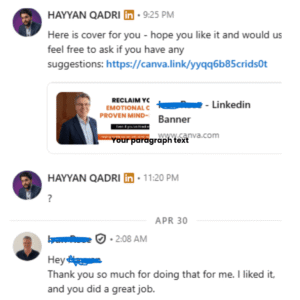
Here is a tested message which I often send to people who run LinkedIn Ads:
“Hi {First Name}! I’m seeing your LinkedIn Ads. Are you satisfied with the results?”
This approach feels like a conversation starter because it is one. The goal of the first message isn’t to close a deal. It’s to get a reply.
How to Personalize LinkedIn Messages at Scale
Real personalization is not just putting someone’s name into a template. It means taking a couple of minutes to actually understand the person you’re reaching out to.
This is the core of any strong LinkedIn outreach strategy.
Look at their recent posts, company updates, or LinkedIn activity.
May be their company just raised funding. Maybe they’re scaling quickly and hiring new SDRs. Maybe they shared a challenge that directly connects to what you offer.
When your message reflects something that’s actually happening in their world, it stops feeling like outreach and starts feeling like relevance. And that’s what drives higher acceptance and reply rates.
Keep It Short and Mobile-Optimized
LinkedIn messages get read on phones, in the chat overlay, between meetings. Long messages which have walls of text that people skip, and don’t get reply.
Keep your first message short, clear, and natural which should be consist on around 3 to 5 sentences. Write the message in the way you are talking with a professional contact, not like a marketer who sends sales email.
Also, avoid using complicated business words or sales-style language. Phrases like “touch base” or “circle back” make your message sound like a sales pitch instead of a real conversation.
Keep your wording simple, natural, and human which is easy to understand and brings reply.
Step 4: Post Content That Attracts Buyers
One thing many people miss on LinkedIn is that the best leads often come from people who have already been seeing your content for weeks before they reply to your DM.
Consistent and valuable content builds trust and familiarity. It creates your organic visibility. People slowly start recognizing your name and trusting your expertise. It puts your name and expertise in front of potential clients repeatedly. So when you finally send them a message, you’re no longer a complete stranger, you’re someone they’ve already seen and become familiar with.
Post With Intent, Not Just Frequency
Posting for likes and posting for leads are two different things.
If your goal is getting clients, your LinkedIn content strategy should speak directly to the problems which your ideal customers are facing. Use the same words they use, talk about real challenges, and share insights that make them think, “This person understands my problem.”

Viral posts may bring attention, but attention from the wrong audience does not bring clients. Focus on creating content for your ideal customer which solve their problem and seems like you can help them.
Types of Posts That Build Authority and Attract Client
Share content that shows your real experience like outreach teardowns, client case studies, audits, free guides, or simple breakdowns of trends in your industry.
This type of content proves you know what you’re doing without constantly promoting yourself. It also attracts the right people who are already facing the problems which you can solve.
These signal expertise. They create social proof without being self-promotional. And they attract the right readers people who are experiencing the exact problems you solve.
Engage, Don’t Just Broadcast
LinkedIn rewards people who engage, not them who post only.
Spend time leaving thoughtful comments on posts of people which belong to your industry. Share useful content with your own opinion and experience. Join LinkedIn groups where your ideal clients are active and contribute genuinely helpful insights instead of pitching your service.
When people keep seeing your name and comments, you start becoming familiar to them. So when you finally reach out to them, the conversation feels much warmer than a completely cold message from an unknown person.
Step 5: Build a Follow-Up System That Doesn’t Feel Pushy
Most deals don’t happen after the first message. In fact, many conversations only start because of a good follow-up.
The problem is that most people either never follow up or send boring messages like “just checking in,” which usually gets ignored. People don’t reply to messages like this.
Good follow-ups should give value every time whether it’s a useful insight, a helpful resource, or something relevant to the prospect’s business. That keeps the conversation natural instead of making it feel pushy. Effective follow-up adds value at each touchpoint.
The Fibonacci Sequence of Follow-Up Timing
Space out your follow-ups instead of messaging every day. A simple pattern like Day 1, Day 3, Day 7, and Day 12 works much better.
More importantly, every follow-up should bring something useful. Mention a recent company update, share a helpful insight, offer a quick audit, or send a relevant resource.
Avoid empty follow-ups like “just checking in” or “following up on this.” Those messages add no value and usually get ignored.
A better follow-up feels helpful and relevant, not pushy.
Use Thoughtful Questions to Keep the Conversation Going
Instead of asking for a call in every message, focus on building a real conversation. Ask simple and thoughtful questions about their goals, challenges, or what they’re currently working on.
When your questions come from genuine curiosity instead of trying to force a sales pitch, people feel more comfortable replying. That natural conversation builds trust and trust is what eventually leads to quality sales calls.
Step 6: Use LinkedIn InMails and Creator Tools to Expand Your Reach
Once your organic outreach LinkedIn outreach strategy starts working consistently, you can scale it and reach more qualified prospects faster.
LinkedIn InMails
InMails give you access to people outside your network, which can be powerful when used properly.
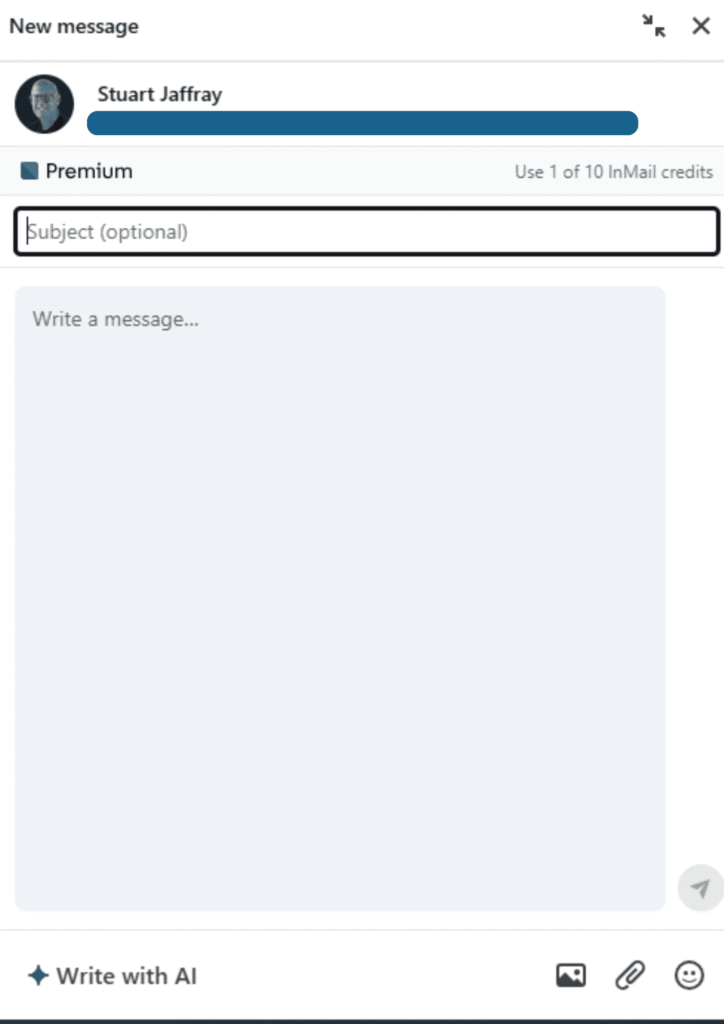
But the approach still matters. If you send the same generic sales template, it will usually get ignored or deleted immediately.
When you keep your message personal, relevant, and focused on their situation instead of a pitch, InMail becomes a real opportunity to start meaningful conversations. This is what separates people who actually get clients from LinkedIn from those who keep getting ignored. Knowing how to message clients on LinkedIn the right way makes all the difference here.
Creator Mode and LinkedIn Live
LinkedIn Creator Mode lets people follow you instead of sending connection requests. This helps you to grow your network and expand your audience without constantly adding people manually. It also unlocks features like LinkedIn Live and newsletters, which help you to reach more people.
When you consistently share value through these tools like webinars, newsletters, or live sessions you’re not just generating leads. You’re building an audience that starts to trust your expertise. And that trust turns your audience into clients, without needing heavy sales conversations.
Saved Searches and Buying Signal Alerts
LinkedIn Sales Navigator lets you save searches and get alerts when new people match your ideal customer profile.
This means your lead list keeps updating automatically as new prospects appear, change jobs, or show buying signals like hiring, funding, or company growth.
What Actually Gets You Your First Client (and the Rest After That)
Everything above is a system. But systems only work when you actually use them in right way.
Most people don’t struggle with strategy. They struggle with execution. Reading is easy. The real progress starts when you spend time building your lead list, improving your profile, and sending a few thoughtful, personalized connection requests today.
Here’s the sequence that gets traction:
1. Fix your profile so it functions as a buyer-centric landing page
2. Define your ICP down to the granular detail
3. Build a sniper list of 50–100 high-fit prospects
4. Send personalized, conversational connection requests, no pitch, no calendar link
5. Once connected, open the conversation with genuine curiosity
6. Post content 2–3 times per week that speaks directly to your target market’s pain points
7. Engage consistently comments, groups, reactions so you’re visible in your prospects’ feeds
8. Follow up with value-adds, not reminders
9. Book calls. Close deals. Use those wins to refine your messaging further.
The people who get results from LinkedIn aren’t doing something magical. They’re doing the human version of outreach personalized interactions, real conversations, consistent visibility at the right scale, with the right people.
That combination creates qualified leads, shorter sales cycles, and clients who already feel like they know you before the first call even starts.
Conclusion
LinkedIn isn’t a place where you send a few requests and clients instantly appear. It’s a professional community. People who treat it that way by showing up their expertise regularly, sharing value, and building real relationships are the ones who actually get clients from LinkedIn consistently.
It’s a long-term game. A post you write today might bring you a client weeks later. A comment you leave today might lead to a reply next month.
Progress comes from action. Start small, improve your profile, build your lead list, or send a few thoughtful messages and build from there.
Your ideal clients are already on LinkedIn. The real question is whether they’ll discover you before you reach them.
Want to get 3-5 leads daily?
Book a free 15 min Strategy Call Today
