
Your LinkedIn profile is more than a digital CV because it serves as your professional identity in the online world. Whether your goal is to explore new career opportunities or strengthen long-term visibility, knowing how to optimize your LinkedIn profile plays a critical role. The way you position yourself on LinkedIn plays a vital role in whether recruiters, hiring managers, and industry professionals notice you or overlook your profile.
This guide explores every essential aspect of LinkedIn profile optimization, covering both fundamental principles and advanced strategies designed to increase visibility, attract meaningful connections, and generate real career opportunities.
What LinkedIn Profile Optimization Actually Means in 2026
Optimization used to mean stuffing keywords into your headline and hoping for the best. That approach now hurts more than it helps.
LinkedIn’s algorithm in 2026 runs on semantic search; it understands context, not just exact phrases. It also factors in a “Depth Score” that measures how long people spend on your profile and whether they take action. Keyword-stuffed profiles that nobody reads actually rank lower over time.
Real optimization means three things working together: the right keywords placed naturally, a profile compelling enough to keep people reading, and enough activity to signal you’re worth contacting.
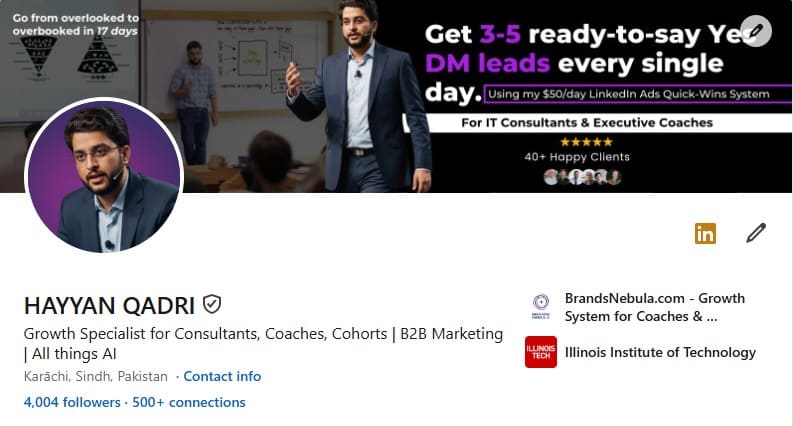
Despite this, many professionals still fail to fully optimize their LinkedIn profiles. They remain incomplete, poorly written, or disconnected from the professional image they actually want to project but in vain. As a result, they miss a best opportunity to shape and control their own career narrative.
How an Unoptimized Profile Is Costing You Leads Every Day
An unoptimized LinkedIn profile significantly reduces your chances of being discovered in recruiter searches. It lowers your success rate in job applications, and often fails to clearly communicate your true professional value to decision-makers. As a result, you may remain unnoticed by opportunities that are actually well aligned with your skills and experience.
In contrast, a well-optimized and strategically built LinkedIn presence increases recruiter visibility, encourages inbound opportunities, and positions you as a trusted and credible professional within your field.
Step-by-Step LinkedIn Profile Optimization Guide
LinkedIn profile optimization starts with a clear understanding of what “optimization” truly involves: shaping your online presence so it matches the way recruiters, hiring managers, and industry professionals actively search for candidates with your skills and expertise.
You can read here more about How an Optimized LinkedIn Profile generates Leads.
1. Profile Photo The First Filter
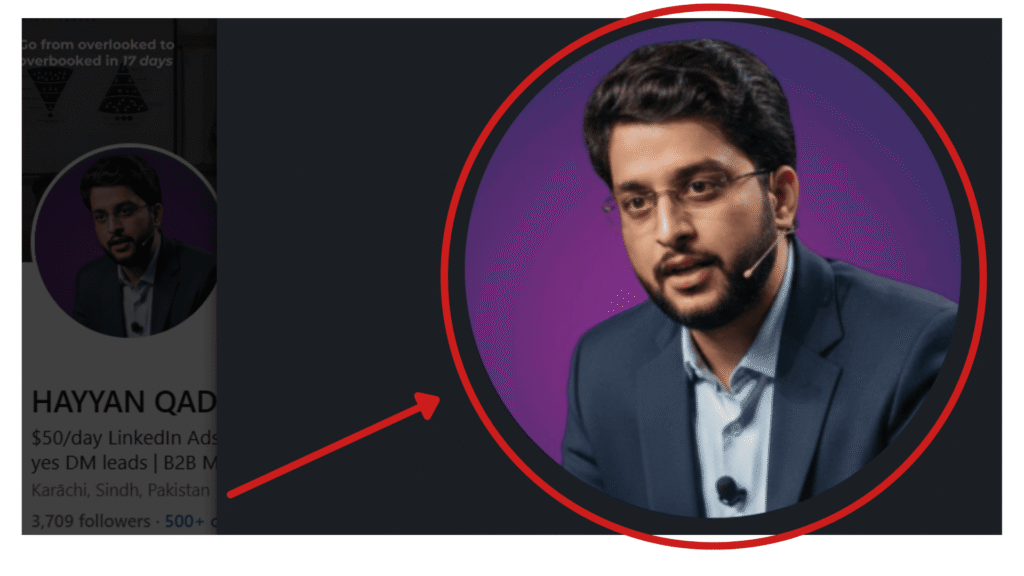
A professional headshot generates 21x more profile views and 36x more recruiter messages than no photo. Good lighting, a clean background, and a face that fills most of the frame is all you need. No group shots. No event photos. Check it on mobile too: over 57% of LinkedIn views happen on a phone, and awkward mobile crops are more common than you’d think.
2. Banner Image 67% of People Leave This Blank
That blue default background is a wasted opportunity. Your banner is the first full-width visual a visitor sees. A simple, clean image that reflects your profession or specialty takes ten minutes to create in Canva and immediately signals that you’re intentional about your professional brand.
3. Headline Your Most Important 220 Characters
Your headline appears in every search result, every comment, every connection request you send. LinkedIn weights it more heavily than any other section for search ranking.
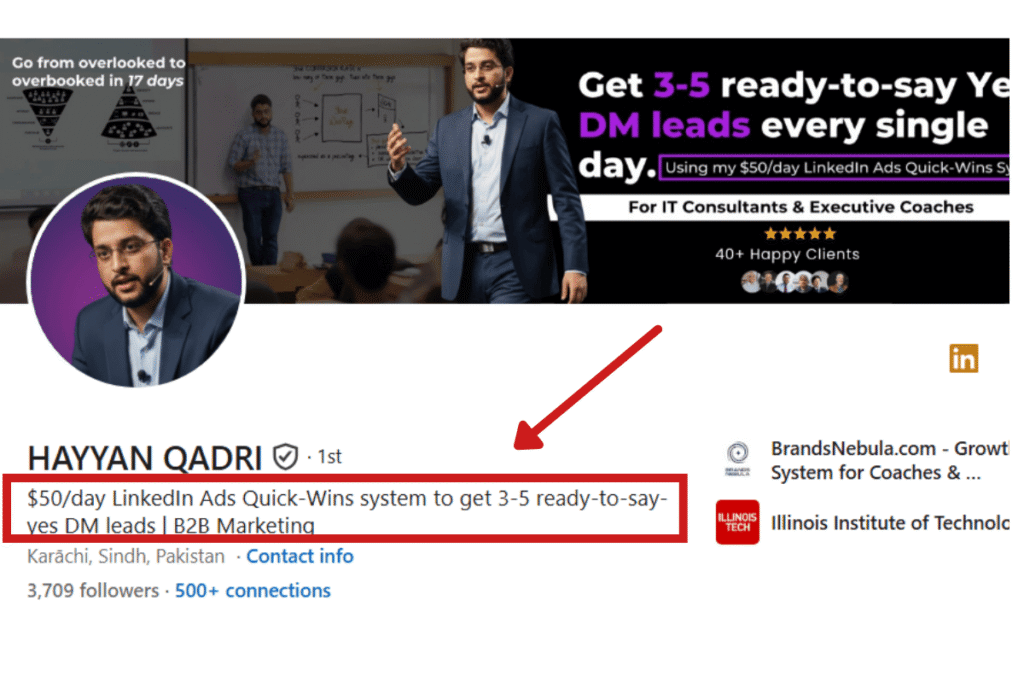
Stop using your job title alone. Use this format instead:
[What you do] | [Who you help] | [A specific result or differentiator]
For example:
❌ “Marketing Manager at Acme Corp”
✅ “B2B Content Strategist | Helping SaaS Companies Build Organic Pipeline | Scaled 3 Startups from 0 to 50K Monthly Readers”
The second version contains searchable keywords, communicates value, and gives someone a reason to click through.
Use at least 150 of your 220 available characters. Every unused character is a missed keyword placement.
4. About Section Where LinkedIn Personal Branding Happens
This is where good profiles become great ones and where most people either write nothing or something so generic it reads like a job posting.
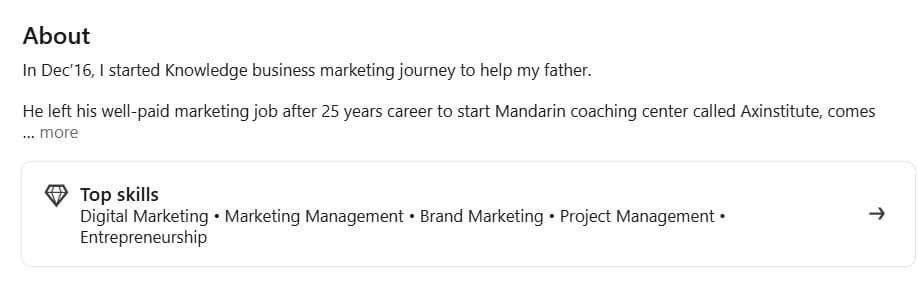
You have 2,600 characters. Use at least 1,200. The first 300 characters are critical because that’s what’s visible before “see more.” Your opening line has to earn the click.
 A strong About section covers four things, in this order:
- What you do and who you do it for specific, not vague
- What makes your approach different not “results-driven,” something real
- A career moment or achievement that proves your point
- A clear call-to-action tell people exactly what to do next
Write it in first person, conversational tone. If it doesn’t sound like something you’d actually say out loud, rewrite it.
5. Experience Don’t Write Job Descriptions
86% of LinkedIn profiles describe job duties. Duties tell recruiters what you were hired to do. What they actually want to know is what you delivered.
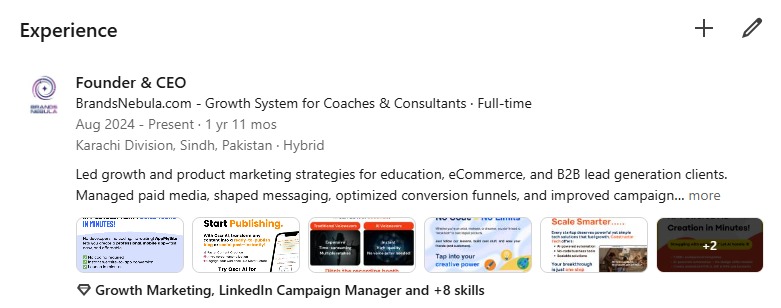
Use this formula for every bullet point:
Action verb + specific task + measurable result
❌ “Responsible for managing the sales team.”
✅ “Led 9-person sales team through full pipeline restructure reduced average sales cycle from 47 to 28 days and closed two enterprise contracts worth $1.4M in a single quarter.”
Numbers make stories credible. Specificity makes them memorable. Both together make someone pick up the phone.
6. How to Turn Your LinkedIn Skills Into a Search Visibility Engine
LinkedIn allows up to 100 skills, and this section functions as searchable metadata for LinkedIn’s internal search engine. Your top three skills display prominently and carry the most weight.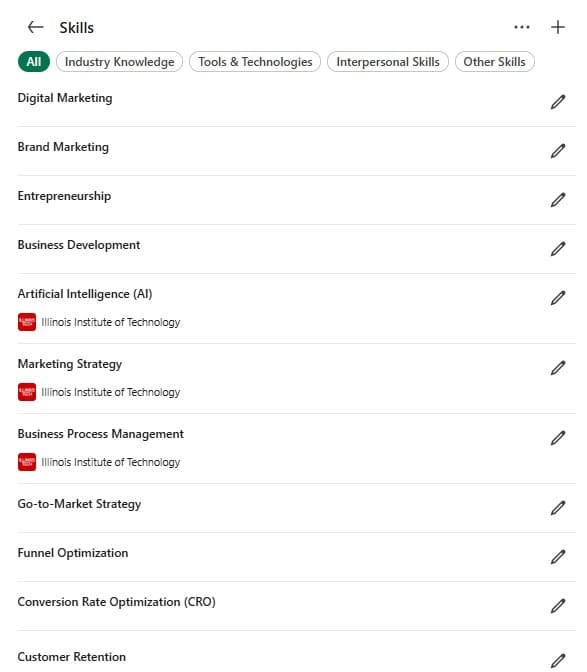
Avoid generic skills like “Leadership” or “Microsoft Word” recruiters don’t search for those. Instead, mirror the specific language from 15-20 job postings in your target area. Those recurring terms are your keywords.
Getting endorsements on your top 5-10 skills matters too. Endorsed skills rank higher in search and build credibility with profile visitors. Ask former colleagues or clients and offer to endorse theirs in return.
7. Use Your Featured Section to Build Trust
The Featured section appear just below your About section and is the best place on your profile to prove expertise before someone reads a single line of your experience.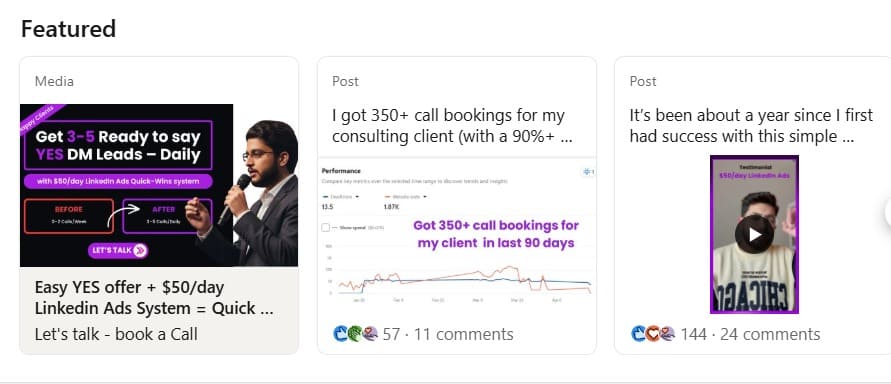
Feature your strongest LinkedIn post, a case study, a media appearance, your booking link, or a client result. For consultants and freelancers especially, this section works as a mini portfolio. Keep it updated an outdated Featured section signals neglect, not expertise.
8. How Should be Your Services Section
It is one of the most valuable tools for anyone offering professional services. The Services section makes your profile discoverable in LinkedIn’s service provider search, a separate search channel from general profile search.
Potential clients actively browsing for specific services can find you here even if they’ve never heard your name. To add it: go to your profile “Add profile section” then add “Services” under Highlight.

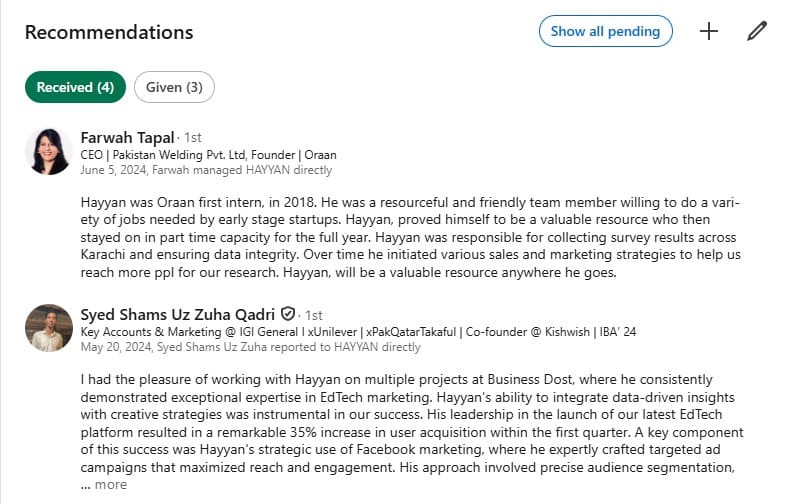
9. Add Recommendations that Build Social Proof
One specific, outcome-focused recommendation from a past client or manager is worth more than any amount of self-promotion.
Aim for at least five. A mix of managers (work quality), clients (results), and colleagues (collaboration) is ideal. When asking, make it easy to mention the specific project, suggest what you’d love them to highlight, and give them a sentence or two as a starting point if needed.
10. Add Certifications, Licenses, and Education
Certifications and credentials significantly strengthen your LinkedIn profile optimization by improving both credibility and search visibility. They validate your expertise and help recruiters quickly assess your qualifications.
Examples include certifications like PMP for project management, Google Ads for digital marketing, or CPA for accounting. These add authority to your profile and make your skills more trustworthy.
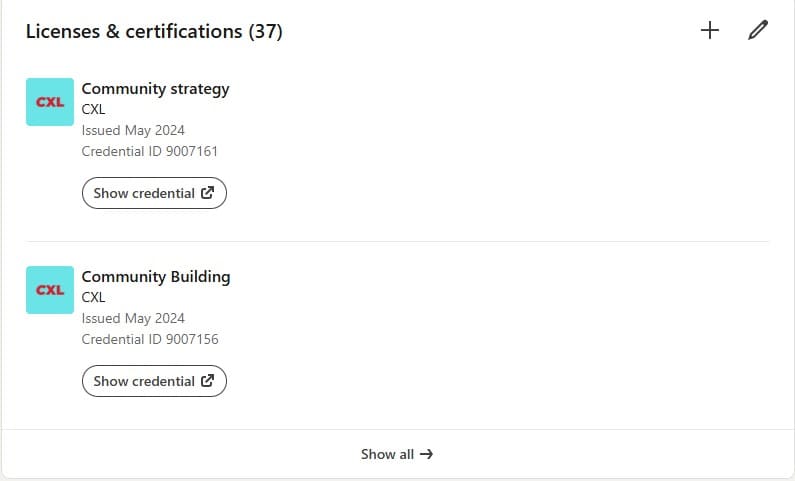
LinkedIn allows you to add each certification with details such as the issuing organization, issue date, and expiration date. Whenever possible, include a verification link so your credentials can be easily validated.
Short-term and online certifications from platforms like Coursera, HubSpot Academy, LinkedIn Learning, and Google also add value. They reflect continuous learning and professional development qualities that are highly attractive to recruiters and clients alike.
11. Stay Active: Post, Comment, and Engage Consistently
LinkedIn now prioritizes deeper interactions such as time spent on content and meaningful comments. Simple likes carry less weight, while real conversations in the comments significantly improve visibility.
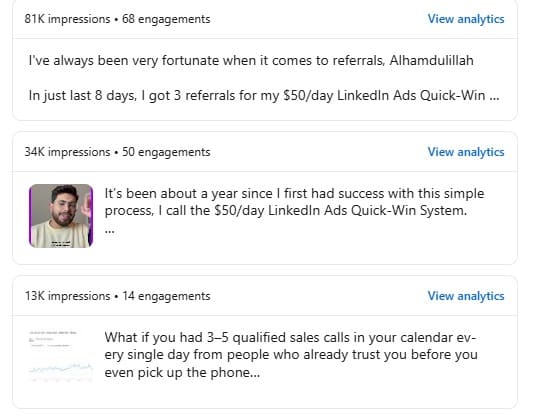
As reach continues to decline for average posts, engagement quality has become more important than ever. In today’s algorithm, consistent participation and valuable discussions are key to expanding your profile’s reach and opportunities.
LinkedIn Profile Optimization Best Practices: Avoid these Mistakes and Fix Today
Review these essentials before your profile goes live:
1. Leaving profile visibility off for search engines
Go to Privacy then move on visibility and edit your public profile. If your profile isn’t visible to search engines, you’re cutting off Google as a discovery channel entirely.
2. Never posting or engaging on LinkedIn with community
LinkedIn’s algorithm suppresses dormant profiles over time. One thoughtful post per week and a few genuine comments on others’ content is enough to stay visible.
3. Skipping Creator Mode
If you post content at all, enable Creator Mode. It changes your “Connect” button to “Follow,” dramatically expanding your potential audience and unlocks LinkedIn’s newsletter and live features.
4. Forget to Update LinkedIn Profile after Some Time
An outdated profile misrepresents you. Set a quarterly reminder to refresh at least one section: a new achievement, a new certification, an updated Featured post.
When Will Your LinkedIn Profile Start Delivering Results?
Week 1-2: Profile views increase as search appearances improve.
Week 3-4: Recruiters and relevant profiles start appearing in “Who viewed your profile.”
Month 2-3: Inbound messages begin. Connection request quality improves noticeably.
Month 3-6: Compound effects recommendations, content, and keyword depth work together to generate consistent inbound.
LinkedIn profile optimization isn’t a one-time task. Treat it like a living asset: deep review every quarter, light updates monthly.
Ready to Turn Your LinkedIn Profile Into a Lead Magnet?
Your LinkedIn profile is working right now either attracting opportunities or quietly filtering them out. There’s no neutral setting.
At LinkedIn Impact, we build and optimize LinkedIn profiles that generate real inbound for job seekers, consultants, and business owners who are done being invisible.
Book a free strategy call today and let’s make your profile do the work.
Frequently Asked Questions about LinkedIn Profile Optimization
Q1. Do I need LinkedIn Premium to rank higher in searches?
No. A well-optimized free profile consistently outperforms a poorly optimized Premium one. Premium helps with InMail and profile views; it’s a complement to optimization, not a substitute.
Q2. Should I use the “Open to Work” frame?
LinkedIn has a recruiter-only setting for this feature, so your current employer typically won’t see it. If you’re actively looking, use it the visibility boost is real.
Q3. How often should I update my LinkedIn profile?
Do a full review every month or week of your LinkedIn profile. Smaller updates a new achievement, a new featured post monthly. LinkedIn’s algorithm favors active, recently updated profiles.
Q4. Is it worth hiring someone to optimize my profile?
If you’re targeting high-value roles or clients and not getting traction, yes. One opportunity generated through an optimized profile typically returns far more than the cost of professional help.
